Author name: muhdrinshad24@gmail.com

From Zero to Growth How I Helped a Local Business
Digital Marketing

From Zero to Growth: How I Helped a Local Business Scale with Digital Marketing

I have consistently held the view that digital marketing serves as one of the most significant equalizers in the realm of business. In the past, only companies with huge budgets could get noticed. You needed billboards, radio ads, and magazine spreads—things that were far beyond the reach of a small business owner. But today, even a business with a modest budget can compete with industry giants if it uses the right online strategies. This belief was put to the test when I met a local business owner whose dream was hanging by a thread. They had products they believed in, but their sales were barely covering costs. They weren’t just struggling financially—they were mentally exhausted, unsure of what to try next, and dangerously close to giving up. When they first reached out to me, they said something I’ll never forget: “I know my products are good, but no one knows about them.” And that’s exactly the problem I set out to solve. This is the story of how I took them from near-invisibility to steady, sustainable growth using a step-by-step digital marketing approach. It wasn’t about throwing money at ads or copying trends—it was about truly understanding their business, their customers, and the unique value they could offer. The Starting Point: A Business at Zero Every success story starts with a clear picture of the starting line. When I first assessed their situation, I saw the same problems I’ve seen in many small businesses. Their social media accounts were either inactive or posting without any real strategy. Their website was outdated, hard to navigate, and not optimized for mobile—despite the fact that most of their potential customers were browsing on their phones. They had no search engine visibility, which meant that when people looked online for the very products they sold, competitors were getting all the clicks and sales. Even worse, there was no consistent brand identity. The logo, colors, and messaging varied across platforms, giving an unprofessional first impression. In today’s world, where people make snap judgments in seconds, that’s a dealbreaker. We sat down and talked through their goals. They didn’t just want more sales; they wanted to be recognized in their community as the go-to brand in their category. They wanted people to see their products and immediately think of quality and trust. It was a big ambition, but ambition is the fuel that makes digital marketing work. Understanding the Market and Target Audience Before you can grow a business, you need to know exactly who you’re trying to reach. Too many businesses try to market to “everyone,” but in reality, that means they connect with no one. I explained to the owner that we needed to identify our ideal customer—the person most likely to love their products, talk about them, and come back for more. I started with competitor analysis, looking at businesses that were doing well in the same niche. I studied their social media strategies, website content, and customer reviews. This gave us a sense of what was working in the market and where the gaps were. Then, I used tools like Google Trends and Facebook Audience Insights to gather real data on demographics, interests, and online behavior. We discovered that our ideal audience wasn’t just “people in the city”—it was primarily women aged 25–45, interested in home decor, quality craftsmanship, and sustainable products. They valued aesthetics but also appreciated practical benefits. This insight shaped every marketing decision moving forward. I also encouraged the business owner to talk to existing customers, even if there were only a few. Sometimes the best insights come directly from the people who’ve already bought from you. We learned that customers loved the product quality but often didn’t even know the business existed until a friend recommended it. That told me our biggest challenge wasn’t convincing people to buy—it was making sure they knew about us in the first place. Building a Strong Online Presence Once we knew who we were talking to, the next step was making sure they could find us—and that when they did, the business looked professional and trustworthy. Your website is your digital shop window. If it’s messy, outdated, or hard to navigate, customers will simply walk away—digitally speaking. We rebuilt their website from scratch. It was clean, mobile-friendly, and designed to highlight the products with high-quality photos. I worked with the owner to write simple but engaging descriptions that spoke directly to our target audience’s needs. Every page had a clear call-to-action, whether it was “Shop Now,” “Contact Us,” or “Sign Up for Our Newsletter.” At the same time, I worked on search engine optimization (SEO). We optimized the site with keywords like “[product] in [city]” so that people nearby would find us. I also set up and verified their Google Business Profile, added professional images, accurate opening hours, and encouraged customers to leave reviews. Within weeks, the business started appearing in local map results—a big step toward getting noticed. Social Media Marketing The business’s old social media approach was simply posting product pictures whenever they remembered to. That doesn’t work anymore. Social media is a place for conversation and connection, not just sales pitches. I created a content calendar to ensure we were posting consistently. Our strategy was simple: mix product highlights with value-based content. We shared behind-the-scenes videos, customer testimonials, tips related to the product niche, and even lighthearted posts to engage followers. On Instagram, we focused on visually appealing posts and interactive stories. On Facebook, we leveraged community groups and events to reach local audiences. Over time, engagement grew. People started tagging friends in posts, asking questions, and sharing our content. That organic engagement was priceless because it built trust. Paid Advertising Campaigns Organic growth is essential, but it can be slow. Paid ads can accelerate results—but only if done strategically. I set up targeted Facebook and Instagram campaigns aimed at people in our local area who matched our target demographics. Instead of generic ads, we created specific campaigns
How Local SEO Can Drive Foot Traffic to Your Dubai
Digital Marketing

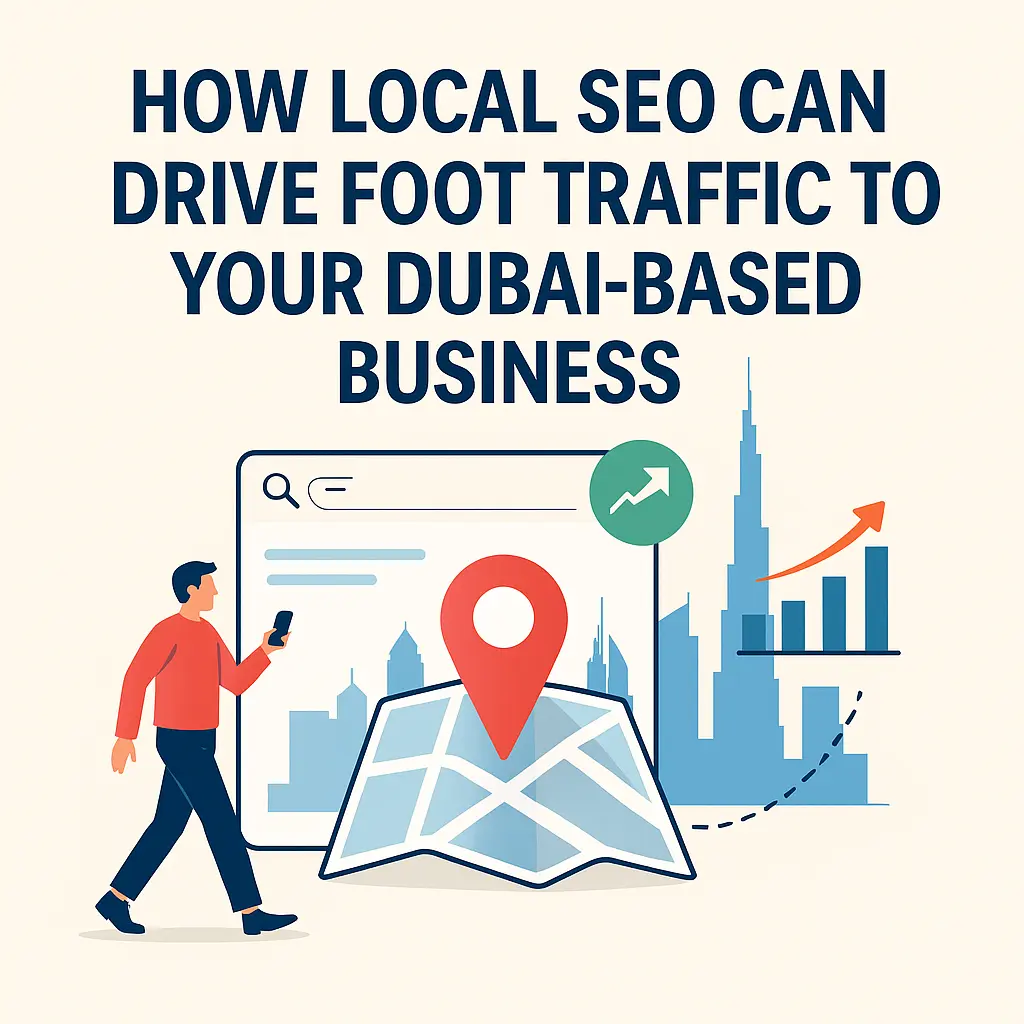
How Local SEO Can Drive Foot Traffic to Your Dubai

Local SEO (Search Engine Optimization) is one of the most effective digital marketing strategies for attracting walk-in customers in a highly competitive city like Dubai. With increasing mobile searches and reliance on Google for everyday decisions, people are looking for services “near me” more than ever. When your business appears at the top of those local search results, you become the first choice—leading to higher visibility, more customer visits, and increased revenue. This blog explains how local SEO works, why it’s crucial for Dubai-based businesses, and how it directly increases foot traffic without relying on paid advertising. Each section focuses on actionable, results-oriented steps to optimize your business for local search visibility. What Is Local SEO? Local SEO involves enhancing your online visibility to ensure that your business is prominently featured in search results for queries related to specific locations. These queries include terms like “near me,” “in [area],” or “[service] Dubai.” Local SEO targets: Google’s Local 3-Pack (the top three local results) Google Maps Localized organic search results Unlike traditional SEO which targets global audiences, local SEO focuses on potential customers within a specific geographic location who are ready to act immediately—whether it’s visiting a store, booking a service, or calling your business. Why Local SEO Is Critical for Dubai Businesses Dubai is a fast-moving, digitally connected city with high consumer expectations and a multicultural population. Local consumers use Google Maps, voice search, and mobile search to locate businesses for everyday services—from healthcare and dining to automotive and beauty. Key reasons why local SEO matters in Dubai: High mobile usage: Most searches are done on smartphones. Proximity-driven decisions: Consumers prefer nearby, quick-access options. Multilingual audience: Content needs to match English and/or Arabic preferences. High local competition: Standing out in search results is essential to survival. Without proper local SEO, even a high-quality business can remain invisible to nearby customers. Core Components of Local SEO That Drive Foot Traffic 1. Google Business Profile Optimization Your Google Business Profile (formerly Google My Business) is the single most important local SEO tool. When optimized correctly, it increases your chances of appearing in map results, mobile searches, and the Google local 3-pack. Key optimization steps: Ensure your Name, Address, and Phone Number (NAP) are accurate. Choose the most relevant categories (e.g., “Auto Repair Shop” or “Beauty Salon”). Include high-resolution images of your store, employees, and services. Enable messaging and add appointment or reservation links. Keep hours of operation updated, including holidays. Write a detailed, keyword-rich business description. Regular updates and interaction with your profile (posting updates, responding to reviews) help maintain strong visibility. 2. Local Keyword Research and Implementation Identifying high-intent, location-specific keywords is essential for attracting the right visitors. People often search using phrases that combine services and locations. Examples of local search queries: “Car wash in Al Quoz” “Best gym near Dubai Marina” “Salon open now in Deira” These keywords should be used naturally in: Page titles and meta descriptions Header tags (H1, H2) Website content and blogs Google Business descriptions Alt tags for images The more precisely your content matches user search behavior, the more likely you are to rank in local results. 3. Consistent NAP Across the Web Your business name, address, and phone number should be consistent across all online platforms. Discrepancies can confuse search engines and diminish your credibility. Key places to audit: Website footer and contact pages Google Business Profile Local directories (Yellow Pages UAE, Dubai Local) Social media platforms Business listing platforms like Yelp, Bing Places Standardizing your NAP data helps search engines trust and rank your business more confidently in local searches. 4. Location-Specific Landing Pages If your business operates in multiple areas or serves a wide range of neighborhoods, create unique landing pages for each target location. Each page should include: Area-specific keywords Tailored content and service offerings Google Maps embed Testimonials from customers in that area Internal links to other service/location pages Avoid duplicating content between these pages; each must be original and relevant to the specific neighborhood or district in Dubai. 5. Customer Reviews and Ratings Online reviews are a direct ranking factor in local SEO and a major influence on consumer trust. Businesses with more positive reviews often rank higher and receive more clicks and calls. Best practices: Request reviews from satisfied customers via SMS, email, or at the point of sale. Make it easy with a direct review link. Respond to every review, thanking customers and addressing any concerns. Avoid fake or incentivized reviews, which violate Google’s policies. Reviews are visible on your Google Business Profile, map listings, and third-party platforms—and can influence click-through rates significantly. 6. Mobile-First Website Optimization Most local searches come from mobile devices, especially in a city like Dubai where people are on the go. A mobile-optimized site improves user experience and ranking. Essential mobile features: Fast page load time (under 3 seconds) Tap-to-call buttons and WhatsApp integration Mobile-friendly navigation Clickable map location and directions Prominent service details and pricing Google prioritizes mobile usability in its local ranking algorithm, so ignoring mobile performance can harm both SEO and user satisfaction. 7. Local Link Building Backlinks from reputable, locally relevant websites enhance your authority and improve search rankings. Sources for local backlinks: Local news websites and magazines Dubai-based blogs in your industry Local partnerships and sponsorships Event collaborations and PR mentions Directory listings with high domain authority The goal is to build links that not only increase authority but also send relevant traffic from within your region. 8. Local Business Schema Markup Incorporating structured data (schema markup) into your website enhances search engines’ ability to comprehend your business’s location, services, and contact details. Recommended schema types: Local Business Organization Opening Hours Specification Review or Aggregate Rating Schema may improve visibility in search results by enabling rich snippets like star ratings, business hours, and maps. 9. Posting Regular Local Content Fresh content signals to Google that your business is still active and relevant. Create blog posts, updates, and promotions tailored to your city or neighborhood. Create

Freelance vs Agency
Digital Marketing

Freelance vs Agency: What’s Better for Your Business in Dubai ?

In today’s fast-moving digital world, businesses in Dubai face an important decision when it comes to scaling their online presence: freelance vs agency — which is better? It’s a question I’ve been asked hundreds of times, and the answer is never one-size-fits-all. The freelance vs agency debate is real, and for businesses navigating the UAE’s competitive market, choosing between the two can shape everything from your marketing success to your return on investment. Dubai is a thriving hub of innovation, creativity, and business. From the bustling streets of Deira to the sleek offices in Downtown, brands are racing to leave a digital footprint that resonates. With this push comes the inevitable conversation: freelance vs agency — which path leads to better results? For many businesses, especially in Dubai’s diverse and rapidly changing environment, this choice can mean the difference between scaling up or stalling out. Consider this: A boutique store in Al Barsha wants to expand its reach via Instagram. They’re considering a freelancer who can provide cost-effective social media services. At the same time, an eCommerce company in Jumeirah is thinking about hiring a digital agency to redesign their website and run Google Ads. Both businesses are asking the same question — freelance vs agency — but their answers might be very different. Why? Because no two businesses are alike. A startup in Dubai Silicon Oasis might need the personal touch and budget flexibility of a freelancer. A well-established law firm in Business Bay might prefer the structured, multi-team expertise of a full-fledged agency. This is where the freelance vs agency decision becomes nuanced — it’s not just about budget or size, but about strategy, vision, and execution. Let’s also factor in cultural expectations and market behaviors. Dubai is home to a multi-cultural consumer base, and marketing efforts need to be finely tuned to local and international audiences. This makes the freelance vs agency conversation even more complex. Do you need the creative agility of a freelancer who understands hyper-local trends? Or do you need the international polish and scalability an agency can offer? The truth is, there are strong arguments on both sides. Freelancers often come with niche skills, affordable pricing, and personalized service. Agencies, on the other hand, bring structured processes, larger teams, and cross-functional support. The key is knowing what your business truly needs — and that’s what this blog aims to uncover. In the coming sections, we’ll explore the pros and cons of the freelance vs agency debate in detail. From pricing and flexibility to expertise and long-term growth, we’ll break it all down so you can make an informed decision. Along the way, we’ll feature real-world examples from Dubai businesses — startups, SMEs, and established enterprises — that have walked both paths. We’ll also touch on trends in digital marketing specific to the UAE region. The rise of TikTok, the importance of Arabic content, the dominance of mobile-first design — all these factors influence the freelance vs agency decision. After all, what works in London or New York doesn’t always translate to success in Dubai. Whether you’re a solopreneur, a founder scaling a SaaS product, or a retail manager launching your next campaign, understanding the dynamics of freelance vs agency could redefine your growth trajectory. It’s not about choosing sides blindly — it’s about aligning your choice with your brand’s values, timeline, and target market. So buckle in. This isn’t a superficial comparison or a one-sided pitch. This is a deep dive into the heart of digital marketing in Dubai, with a clear focus on helping you navigate the freelance vs agency maze — with clarity, confidence, and context. By the end of this post, you’ll not only understand the mechanics of freelance vs agency, but you’ll also have actionable insights to make the right call for your unique business goals. What Does Freelance vs Agency Actually Mean? When comparing freelance vs agency, it’s important to understand what each truly represents. A freelancer is typically a self-employed expert who works independently, often specializing in a few core areas such as SEO, Google Ads, or content marketing. An agency, on the other hand, is a team-based company offering a wide range of services, usually with dedicated departments for each. Before diving deep into the pros and cons, it’s essential to fully understand what the freelance vs agency comparison actually entails. These two options are not just different in terms of structure or size — they reflect entirely different ways of working, collaborating, and delivering results. For any business in Dubai looking to grow its online presence, this foundational understanding is key to making the right choice. Let’s start with freelancers. A freelancer is typically a self-employed individual who offers specialized services — think SEO, Google Ads, website design, content writing, or social media management. Their services are deeply focused, and they bring a high level of personal attention and flexibility to every project they take on. In the freelance vs agency conversation, freelancers are often seen as more accessible and budget-friendly. You work directly with the expert, which can mean faster communication, clearer expectations, and a more personal relationship. In a city like Dubai, where quick turnarounds and agile marketing efforts can be crucial, this level of responsiveness can be a major asset. Freelancers are also typically more adaptable when it comes to changes in project scope or last-minute updates — something many startups and SMEs truly value. On the other side of the freelance vs agency spectrum, we have agencies. An agency is a structured organization that employs a team of professionals, often covering a broad range of digital marketing services — from branding and design to web development, content creation, SEO, paid ads, and beyond. Agencies operate with systems, project managers, team leads, and processes in place to ensure quality control and accountability. When choosing between freelance vs agency, businesses that need multiple services under one roof may lean towards an agency. For example, a company undergoing a complete digital transformation might

Top Digital Marketing Tools You Should Be Using Right Now
Digital Marketing

Top Digital Marketing Tools You Should Be Using Right Now

Digital marketing is more important than ever before. As businesses continue to embrace the digital world, staying ahead of the competition is essential. The Top Digital Marketing Tools have emerged as indispensable assets for marketers who want to streamline their strategies and improve results. Whether you’re running social media campaigns, optimizing your website for search engines, creating email campaigns, or analyzing performance, using the right tools can make all the difference. Choosing the Top Digital Marketing Tools can help marketers work smarter, not harder. These tools allow you to automate time-consuming tasks, analyze data in real-time, and enhance engagement with your audience. In this blog post, we’ll dive into the Top Digital Marketing Tools available today. We’ll break them down by category, highlighting their features, advantages, and how they can help you improve your marketing efforts. By the end of this guide, you’ll have a clear understanding of which tools are essential for boosting your digital marketing strategy and how they can help you achieve measurable success. So, let’s get started with the Top Digital Marketing Tools that you should be using right now. Why Digital Marketing Tools Are Essential In today’s fast-paced marketing landscape, digital marketing tools are not just nice to have—they are essential. The Top Digital Marketing Tools offer solutions that save time, automate processes, and allow marketers to focus on higher-level strategy and creativity. Without these tools, digital marketers would face a cumbersome and inefficient workflow, struggling to track performance and optimize campaigns. These tools serve various purposes across all aspects of digital marketing. For instance, Top Digital Marketing Tools for SEO help optimize websites for search engines, while social media management tools ensure consistent posting and engagement. Email marketing tools automate campaigns to reach large audiences with minimal effort, and analytics tools help monitor key performance indicators (KPIs). The right digital marketing tools can also help businesses scale their efforts. As your marketing efforts grow, so do the demands on your team. Using the Top Digital Marketing Tools allows you to handle higher volumes of data, content, and campaigns with the same—or even less—effort. By integrating the best tools into your digital marketing strategy, you can stay ahead of the competition, track ROI, and scale efficiently. Top Digital Marketing Tools You Should Be Using Right Now Now that we understand why digital marketing tools are crucial, let’s explore the Top Digital Marketing Tools across different categories. Whether you’re focusing on SEO, social media, email marketing, content creation, or analytics, these tools will help you optimize and improve your digital marketing campaigns. SEO Tools Search Engine Optimization (SEO) is foundational to any digital marketing strategy. The Top Digital Marketing Tools in this category allow marketers to track website traffic, identify keywords, and measure performance. Here are the top tools for SEO: Google Analytics: This free tool from Google is the cornerstone of any SEO campaign. It allows you to track website traffic, understand user behavior, and identify which pages are performing well. Google Analytics also integrates with other Google tools, such as Google Ads, making it a vital tool for any marketer. SEMrush: SEMrush is an all-in-one SEO tool that helps with keyword research, site audits, backlink analysis, and more. It provides a comprehensive set of tools for tracking your website’s SEO performance and analyzing competitors. If you’re serious about improving your search engine rankings, SEMrush is one of the Top Digital Marketing Tools to consider. Ahrefs: Another powerful tool for SEO, Ahrefs excels in backlink analysis, competitive research, and keyword research. With one of the largest databases of backlinks, Ahrefs is perfect for understanding your site’s link profile and identifying new link-building opportunities. Moz Pro: Moz Pro is an SEO software suite that provides tools for keyword research, link building, and site audits. It also offers a robust rank tracker that helps you monitor your website’s performance over time. These Top Digital Marketing Tools for SEO help marketers boost organic traffic and improve search rankings, which are critical for online visibility and lead generation. Social Media Tools Social media is a vital channel for reaching and engaging with your target audience. The Top Digital Marketing Tools for social media allow you to manage multiple accounts, schedule posts, monitor performance, and analyze engagement. Buffer: Buffer is a user-friendly social media management tool that allows you to schedule posts, track engagement, and analyze the performance of your content across multiple platforms. Whether you’re managing Facebook, Twitter, LinkedIn, or Instagram, Buffer makes it easy to manage all of your accounts in one place. Hootsuite: Hootsuite is another leading social media management tool that offers comprehensive features for scheduling, monitoring, and reporting. It also includes features like team collaboration, which is essential for businesses with larger social media teams. Sprout Social: Sprout Social is known for its in-depth analytics and reporting. It helps you understand your audience’s behavior, engagement, and content performance across various social media platforms. Canva: Canva is an essential tool for creating eye-catching social media graphics. Whether you’re designing Instagram posts or Facebook cover photos, Canva provides easy-to-use templates that even beginners can customize. By leveraging these Top Digital Marketing Tools, businesses can improve their social media presence, create engaging content, and build a loyal online community. Email Marketing Tools Email marketing is one of the most cost-effective ways to nurture leads and drive conversions. The Top Digital Marketing Tools for email marketing allow you to automate campaigns, segment audiences, and measure results. Mailchimp: One of the most popular email marketing platforms, Mailchimp offers tools for designing emails, managing subscribers, and automating workflows. With Mailchimp, you can create visually appealing email campaigns and track performance in real-time. ConvertKit: ConvertKit is ideal for creators, bloggers, and small businesses looking for an easy-to-use email marketing tool. It offers automation features, landing pages, and email templates that help marketers engage with their audience. ActiveCampaign: ActiveCampaign is a powerful email marketing and automation platform that offers advanced segmentation, CRM tools, and customer tracking. It’s perfect for businesses looking to

successful social media strategy for your business
Digital Marketing

How to Build a Successful Social Media Strategy for Your Business

In today’s fast-paced digital world, creating a successful social media strategy for your business is more crucial than ever. Social media platforms have become a fundamental part of business marketing strategies, offering a unique opportunity to connect with a wide audience. A well-executed social media strategy can help businesses increase brand awareness, foster relationships with customers, and drive sales. However, a successful social media strategy for your business doesn’t happen overnight. It requires clear planning, dedication, and continuous optimization. A successful social media strategy for your business is built upon understanding your business goals and aligning them with your social media efforts. Whether your aim is to increase engagement, build a community, or boost sales, each of these objectives requires a tailored approach. In this post, we will explore how to build and refine a successful social media strategy for your business that not only reaches your target audience but also resonates with them, ultimately helping you achieve measurable results. Why a Successful Social Media Strategy is Essential for Your Business A successful social media strategy for your business is essential because it allows you to harness the full potential of social platforms to reach and engage your audience. Without a strategy, social media marketing can be chaotic and ineffective, leading to wasted resources and missed opportunities. With billions of users on platforms like Facebook, Instagram, and Twitter, a successful social media strategy for your business enables you to stand out from the competition. To build a successful social media strategy for your business, you need to have a clear understanding of the role social media plays in your overall marketing plan. Social media is not just about posting content; it’s about creating valuable interactions that build trust and foster loyalty. A successful social media strategy for your business helps you consistently engage with your audience, ensuring that your brand remains top of mind. Set Clear and Measurable Goals for Your Social Media Strategy The foundation of any successful social media strategy for your business begins with goal-setting. Clear and measurable goals provide direction and help you track progress. Without specific goals, it becomes challenging to determine if your social media efforts are truly paying off. When setting goals for a successful social media strategy for your business, make sure they are aligned with your overall business objectives. For example, if you want to increase brand awareness, your goal might be to grow your social media following by 25% over the next six months. If lead generation is your primary goal, you may focus on increasing website traffic through social media posts and paid ads. A successful social media strategy for your business also relies on using the SMART framework—Specific, Measurable, Achievable, Relevant, and Time-bound goals. By applying this framework, you ensure that each goal is not only clear but also actionable and realistic. For example, a SMART goal could be: “Increase the Instagram engagement rate by 15% over the next quarter through daily posts and Instagram Stories.” Setting these kinds of measurable goals for a successful social media strategy for your business ensures that you can track progress and make data-driven decisions to improve your strategy over time. Understand Your Audience to Create a Tailored Strategy One of the keys to building a successful social media strategy for your business is understanding your audience. Every business has its own unique audience, and knowing who you are targeting will help you craft content that resonates with them. If you don’t know your audience, how can you create a successful social media strategy for your business? Start by researching your target demographic. What are their age groups, interests, pain points, and online behaviors? Tools like Facebook Insights, Google Analytics, and Instagram Analytics can give you a detailed overview of your audience’s behaviors, helping you tailor your content to their preferences. A successful social media strategy for your business goes beyond just creating posts—it’s about creating content that speaks to your audience. This means understanding what your audience values and delivering it in a way that grabs their attention. Whether it’s helpful tips, behind-the-scenes content, or promotional offers, your social media posts must align with your audience’s needs and desires. Knowing your audience allows you to make smarter decisions about which platforms to use, what kind of content to create, and when to post. By doing so, you ensure that your successful social media strategy for your business is both effective and efficient. Choose the Right Social Media Platforms for Your Business Choosing the right social media platforms is another critical element of a successful social media strategy for your business. Not all platforms are suitable for every business, so it’s important to choose those that align with your target audience and marketing goals. While Facebook may be ideal for community building, Instagram excels at visual content, and LinkedIn is perfect for B2B marketing. A successful social media strategy for your business requires selecting the right platform for your brand. For example, if you run a restaurant, Instagram is a great platform to showcase your menu, ambiance, and food photography. If you’re a software company, LinkedIn might be the best platform for posting industry insights and connecting with decision-makers. Focus on platforms where your audience is most active and where your content is likely to perform best. By dedicating your efforts to the right platforms, you ensure that your successful social media strategy for your business is not spread too thin, and your resources are used effectively. Create Engaging Content to Connect with Your Audience Content is at the heart of any successful social media strategy for your business. No matter how well you define your audience or choose your platforms, if the content you share is unengaging or irrelevant, your strategy will fail. Your content should speak to the interests of your target audience while showcasing your brand’s personality. There are various types of content that can contribute to a successful social media strategy for your business, including blog posts,

How to Grow Your Business Online A Digital Marketing Guide for Dubai Entrepreneurs
Digital Marketing

How to Grow Your Business Online: A Digital Marketing Guide for Dubai Entrepreneurs

In today’s rapidly evolving digital world, learning how to grow your business online has become essential for success. For entrepreneurs in Dubai, a city known for its luxury, modernity, and technological advancements, leveraging digital marketing strategies is crucial to stay competitive and connect with an increasingly tech-savvy audience. Dubai is home to a connected population with high internet penetration, where the majority of people are active on social media and shopping online. This presents a vast opportunity for entrepreneurs to scale their businesses by embracing online tools and strategies that can enhance visibility, build brand loyalty, and increase sales. With Dubai’s thriving digital infrastructure, businesses can take advantage of a range of digital marketing techniques to gain a competitive edge. Whether you’re a startup or an established business, knowing how to grow your business online means mastering key strategies such as search engine optimization (SEO), social media marketing, paid advertising, content marketing, and influencer partnerships. These tactics allow businesses to connect with a larger audience, target the right consumers, and drive more sales in a fast-paced digital landscape. Building an effective online presence starts with a professional website, which acts as the cornerstone of any business. In Dubai, where e-commerce is growing rapidly, your website needs to be user-friendly, mobile-responsive, and optimized for search engines to rank well in local search results. With the city’s diverse population, offering a bilingual website in both Arabic and English will help you reach a wider audience and appeal to local residents. Additionally, ensuring that your website is visually appealing and easy to navigate will help retain visitors and increase conversions. Building a Professional Website In today’s digital age, a website is the foundation of any successful online business. A professionally designed website helps build credibility and serves as the main point of contact between your business and potential customers. For Dubai entrepreneurs, having a website that resonates with the local audience is paramount. One of the most important aspects to consider is ensuring that your website is mobile-responsive. With a high percentage of users accessing the internet via smartphones, your website needs to be optimized for mobile devices to enhance the user experience and reduce bounce rates. Additionally, your website should be easy to navigate, with clearly defined sections for products, services, and contact information. Customers should be able to find what they are looking for with minimal effort. It’s also crucial to make your website SEO-friendly, meaning the content, structure, and code should be optimized to rank well on search engines like Google. To attract local customers in Dubai, it’s important to offer a bilingual website, providing both Arabic and English language options. The city’s multicultural demographic means that catering to both languages will help you connect with a wider audience. Moreover, localization goes beyond just translation. You should ensure that your website reflects Dubai’s culture and values, such as highlighting services and products that appeal specifically to residents of the region. Search Engine Optimization (SEO) for Dubai SEO is a crucial aspect of growing your online business in Dubai. It is the practice of optimizing your website and content to appear higher on search engine results pages (SERPs). This is essential because the higher your website ranks, the more likely people are to find your business online. Local SEO is particularly important in Dubai, as most customers search for businesses that are near them. One of the first steps in local SEO is setting up a Google My Business account. By claiming your business on Google, you can ensure that your business shows up on Google Maps and in local search results when potential customers are looking for services in your area. Another key element of SEO is keyword optimization. Researching and targeting the right keywords for your business is essential to improving your search rankings. Use local keywords that include the city or neighborhood you operate in, such as “best restaurant in Dubai” or “Dubai marketing services.” This will help search engines associate your business with the local area and make it more likely for customers in Dubai to find you. Furthermore, implementing both on-page SEO (e.g., optimizing titles, meta descriptions, and headings) and off-page SEO (e.g., backlinks and social signals) can significantly boost your website’s visibility. Dubai’s competitive business environment makes it crucial for entrepreneurs to invest time and effort into ensuring their website is optimized for search engines. Leveraging Social Media for Business Growth Dubai’s social media usage is among the highest in the world, with platforms like Instagram, Facebook, and LinkedIn playing a significant role in how businesses interact with their customers. To grow your business online in Dubai, social media is a powerful tool that can help you reach a wide audience, build brand awareness, and drive sales. One of the most popular platforms for businesses in Dubai is Instagram. Known for its visual appeal, Instagram allows businesses to showcase their products, services, and brand story through high-quality images and videos. Instagram’s Stories feature is particularly effective for real-time updates, promotions, and behind-the-scenes content. You can also utilize Instagram Shopping to directly sell products through the app, making it easy for customers to make purchases without leaving the platform. Facebook remains another essential platform for Dubai entrepreneurs, particularly for businesses targeting a wide demographic. With over 3 million Facebook users in Dubai, businesses can create targeted ad campaigns, engage with customers, and join community groups. Facebook’s Ads Manager enables you to create hyper-targeted ads based on factors such as location, age, interests, and behaviors. For B2B businesses, LinkedIn offers a platform for professional networking and thought leadership. By sharing articles, case studies, and industry insights, you can position your business as an expert in your field. In addition to organic content, paid ads on social media can help boost visibility. Platforms like Facebook and Instagram offer robust advertising tools that allow businesses to run campaigns targeting specific audiences in Dubai. Through geo-targeting, you can ensure that your ads reach people in your city or specific

5 Proven Strategies to Boost Your Business with Digital Marketing in 2025
Digital Marketing

5 Proven Strategies to Boost Your Business with Digital Marketing in 2025

In today’s fast-paced digital world, businesses must constantly adapt to new trends and technologies to stay competitive. Digital marketing is no longer just an option but a necessity, and in 2025, it’s crucial to embrace the latest strategies to drive growth. If you want to learn how to thrive in this ever-evolving landscape, here are 5 Proven Strategies to Boost Your Business and stay ahead of the competition. These strategies are designed to help you maximize your digital marketing efforts, enhance customer engagement, and drive sales growth. By implementing these proven methods, you can ensure that your business is ready to make the most out of the opportunities that digital marketing presents in 2025. The year 2025 is set to usher in a new era of digital marketing where new tools, techniques, and approaches are being introduced at a rapid pace. From artificial intelligence (AI) and automation to immersive technologies like virtual reality (VR) and augmented reality (AR), the digital world is becoming more sophisticated and interconnected. Businesses need to harness these advancements to stay competitive and connect with their customers on a deeper level. But with so many changes occurring, it can be overwhelming for business owners to figure out where to focus their efforts. That’s why it’s essential to understand the key strategies that will help your business not only survive but thrive in 2025. In this context, the focus on 5 Proven Strategies to Boost Your Business becomes crucial. These strategies are carefully selected to address the current trends and challenges of the digital age, and they are designed to provide practical, actionable steps that businesses can implement to improve their digital marketing effectiveness. Whether you’re a small startup or an established enterprise, these strategies will help you maximize your marketing potential, optimize your customer engagement, and drive sustainable business growth. Implementing these methods will ensure that your business is positioned to make the most out of the ever-growing opportunities presented by digital marketing. One of the most exciting aspects of digital marketing in 2025 is the continued integration of advanced technologies like artificial intelligence (AI) and machine learning. These technologies enable businesses to automate processes, analyze large volumes of data quickly, and deliver highly personalized experiences to their customers. As a result, businesses that embrace AI-powered tools and automation will have a significant edge over their competitors by improving efficiency and targeting the right audience with relevant messages. This is just one of the 5 Proven Strategies to Boost Your Business that will transform how businesses approach marketing in the coming years. Another key factor in 2025’s digital marketing landscape is the growing importance of video marketing. As consumers’ preferences continue to shift toward visual content, businesses must adapt by incorporating video into their marketing strategies. Platforms like YouTube, TikTok, and Instagram have become critical channels for businesses to showcase their products, share their brand stories, and connect with their audience in a more engaging and personal way. Video content not only increases engagement but also helps businesses build a stronger emotional connection with their customers. For businesses looking to stay ahead, creating and promoting video content is an essential part of their digital marketing strategy. The digital marketing realm is evolving quickly, and staying informed about the latest trends is critical. As the digital landscape continues to shift, it is imperative for businesses to adopt modern marketing strategies that align with their customers’ expectations. By focusing on 5 Proven Strategies to Boost Your Business—such as embracing automation, utilizing video marketing, and understanding the role of AI in marketing—businesses can maintain their relevance, connect with their audience more effectively, and accelerate growth in 2025. By implementing these strategies, companies can create a competitive advantage that will serve them well in this rapidly changing market. AI-Powered Tools and Automation One of the most effective proven strategies to boost your business in 2025 is to leverage AI-powered tools and automation systems. AI is transforming digital marketing by offering businesses the ability to automate repetitive tasks, personalize customer interactions, and analyze vast amounts of data more efficiently. Tools like chatbots, email marketing automation, and AI-driven analytics platforms help businesses save time and improve targeting precision. With AI, companies can craft highly personalized customer experiences based on real-time insights, driving better engagement and conversions. Additionally, AI tools help businesses identify patterns in customer behavior, allowing them to predict trends and optimize their marketing strategies. By integrating AI into your digital marketing strategy, you can unlock the potential to reach new heights, making it one of the most powerful proven strategies to boost your business.  The Power of Video Marketing and Storytelling Video marketing continues to dominate the digital space, making it a key strategy for businesses in 2025. As part of the 5 proven strategies to boost your business, incorporating video content into your marketing mix is essential for maximizing audience engagement. Whether through short-form content on platforms like TikTok and Instagram Reels or long-form content on YouTube, videos allow you to convey your message in a visually appealing and memorable way. Video marketing also enables businesses to use storytelling, which is one of the most effective ways to create emotional connections with customers. By sharing your brand’s story or showcasing customer testimonials, you can humanize your business and increase brand loyalty. The success of video marketing lies in its ability to captivate and retain the attention of your target audience. As consumers continue to demand more visual and engaging content, making video marketing a priority is crucial for businesses that want to succeed in 2025. Mastering Social Media Algorithms In 2025, mastering social media algorithms is a must for businesses aiming to increase visibility and engagement. Social media platforms like Facebook, Instagram, and TikTok use algorithms to determine which content appears in users’ feeds, making it essential for businesses to understand how these systems work. One of the 5 proven strategies to boost your business is optimizing your content to align with the preferences of these algorithms. This

Digital Marketing Trends Latest Updates You Need to Know
Digital Marketing

Digital Marketing Trends: Latest Updates You Need to Know

In today’s fast-paced digital world, businesses face the constant challenge of staying up-to-date with the latest marketing trends. The digital marketing landscape is never static; it’s continuously evolving with the introduction of new tools, strategies, and platforms that reshape how businesses connect with their audience. For brands looking to remain competitive, it’s essential to stay ahead of these digital marketing trends and adapt their marketing strategies accordingly. In an era where digital innovation dictates success, understanding the newest developments in digital marketing can give you a significant competitive edge. From Artificial Intelligence (AI) transforming customer interactions to the rise of new social media platforms, it’s no longer enough to stick to traditional methods. Businesses need to embrace the latest trends to maintain visibility and relevance in an increasingly crowded online marketplace. As a freelance digital marketing expert in Dubai, I have witnessed firsthand how rapidly the industry has changed over the years. Digital marketing has evolved from basic strategies like SEO and content marketing to more complex approaches involving automation, data analytics, influencer collaborations, and advanced targeting techniques. This fast-paced transformation has pushed businesses to become more agile, adaptable, and innovative. In Dubai, a city known for its cutting-edge technology and diverse business ecosystem, staying current with digital marketing trends is especially critical. The region is home to an array of businesses—from startups to large enterprises—that are all competing for attention in a bustling digital marketplace. As a freelancer working in such a dynamic environment, I understand the importance of staying ahead of the curve. In fact, helping clients navigate these changes and take advantage of new opportunities has become a key part of my role. For example, the increasing reliance on mobile devices, the surge in voice search, and the demand for video content are just a few trends that businesses in Dubai are embracing to engage with customers more effectively. But with so many changes, it can be overwhelming to keep up. That’s where understanding and implementing the right strategies come into play. Businesses need to not only identify these trends but also align them with their overall marketing goals for maximum impact. In this blog post, I’ll walk you through the most significant digital marketing trends you should be aware of. These updates can shape your marketing strategy, helping you drive growth and succeed in an ever-changing digital environment. Whether you’re a business owner looking to enhance your online presence, a marketer aiming to refine your tactics, or someone exploring freelance digital marketing services, this guide will provide you with valuable insights into the latest industry shifts. By staying informed and embracing new digital tools, businesses can ensure they don’t just keep up with the trends but also leverage them to boost their performance and outshine the competition. Understanding these trends will empower you to stay relevant, engage your audience, and ultimately achieve sustainable business growth in the years to come. The Rise of AI in Digital Marketing Trends Artificial intelligence is one of the biggest trends shaping digital marketing today. From personalized email campaigns to chatbots and predictive analytics, AI is changing how brands interact with their customers. As a freelance digital marketing expert in Dubai, I’ve worked with clients who’ve embraced AI tools to streamline their marketing processes and enhance customer engagement. One example of this is how AI is used in content creation. Tools like GPT-3 and other AI-powered platforms help generate blog posts, product descriptions, and even social media content at scale. Additionally, AI allows for highly targeted advertising, ensuring your marketing efforts reach the right people at the right time. This precision can significantly improve ROI for your campaigns. The Importance of Video Marketing According to recent reports, video content is predicted to account for over 80% of all internet traffic in the near future. If you haven’t already integrated video into your marketing strategy, now is the time. As a freelance digital marketing expert in Dubai, I often advise my clients to create engaging video content for their social media channels, websites, and email marketing campaigns. Videos not only capture attention but also build trust and emotional connections with your audience. Whether it’s through YouTube, Instagram Reels, or TikTok, short-form video content has become a key driver of engagement. Brands that create authentic, relatable videos often experience higher engagement and conversion rates. Website Optimization In the ever-evolving digital world, a well-optimized website is the cornerstone of any successful digital marketing strategy. As a freelance digital marketing expert in Dubai, I’ve seen firsthand how website optimization can drastically improve online presence, user experience, and conversion rates. Website optimization involves a combination of technical SEO, user experience (UX) design, content strategy, and ensuring fast loading speeds. Search engines, especially Google, have become more sophisticated in evaluating the overall user experience on a site. Factors such as mobile responsiveness, page speed, and easy navigation now play a significant role in rankings. Social Media Algorithm Changes Social media algorithms are constantly changing, making it more difficult for businesses to maintain organic reach. Platforms like Facebook, Instagram, and TikTok continue to tweak their algorithms, which affects how content is shown to users. As a freelance digital marketing expert in Dubai, I help my clients understand these algorithm changes and adapt their strategies accordingly. One key update is the shift toward prioritizing content that generates meaningful engagement, such as comments, shares, and saves, rather than just likes. Additionally, platforms are giving more attention to video content and stories, which means incorporating these formats into your social media strategy can help increase visibility. The Power of Influencer Marketing Influencer marketing has been a powerful tool for brands for years, and it continues to grow in importance. Collaborating with influencers allows businesses to reach new audiences, build brand awareness, and enhance credibility. As a freelance digital marketing expert in Dubai, I often recommend working with micro-influencers who have a smaller but highly engaged following. Micro-influencers can create authentic, relatable content that resonates more with their audience, leading to